
Ape Warforts
Tap4fun Trident LimitedStrategy
4.6341.00 Reviews
- Version
- 0.91.0
- Installs
- 100.00K
- Age Rating
- Everyone
Screenshots
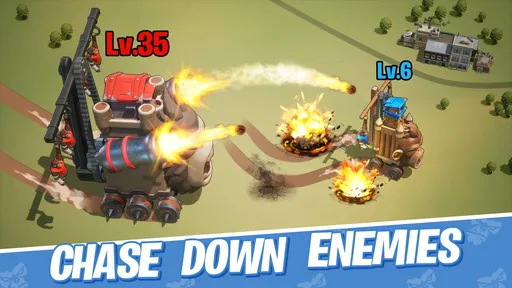
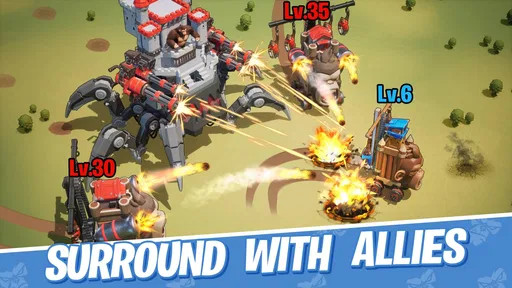
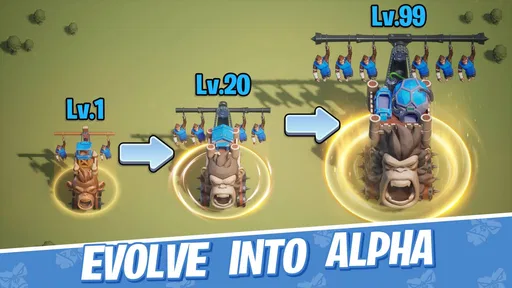
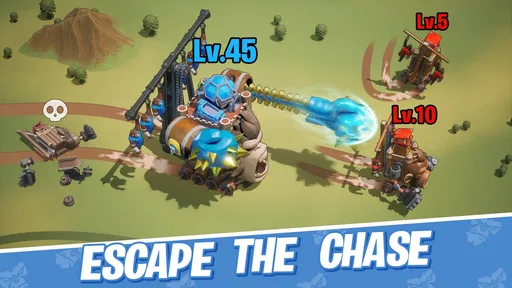
Our Review of Ape Warforts
 Analysis by Appyee
I approached Ape Warforts as a newcomer rather than assuming I already understood its moving-fortress premise. That made the opening experience much easier to judge: this is a free strategy game from Tap4fun Trident Limited that asks you to learn its world through small decisions before expecting you to think like a long-term commander. The central appeal is clear from the first moments. You are not simply placing a fixed base and waiting for resources; the game frames its conflict around mobile strongholds in an ape-themed setting, so movement, preparation, and timing matter to the way I read every objective.
The game is listed for Everyone, runs on Android starting with version 8.0, and currently appears as version 0.91.0. Those details make it approachable for a broad audience, although the strategic layer is still better suited to players who enjoy planning than to someone looking for an instant action game. It is free to start, with optional purchases ranging from $0.99 to $99.99 per item. I would keep that in mind from the beginning, because the most comfortable way to play is to treat purchases as optional rather than as part of the basic learning process.
Getting from the first launch to a useful early win
I’d use this section to focus on turning the opening tutorial into a repeatable decision-making habit: check the objective, consider what an action will cost, and leave yourself options for what comes next. That approach makes an early success more useful than a quick tap-through, and it sets up the next section’s closer look at what to prepare before committing.
What the opening hours actually feel like
The first thing I noticed is that the moving-fortress idea gives the setting a different identity from a standard village-building strategy game. In a familiar base game, I usually think in terms of walls, upgrades, and a permanent home. Here, the idea of a fortress that can change position makes me pay more attention to where my strength is concentrated and whether an action helps my next move, not just my current screen.
That difference is important for first-time players. I would not begin by trying to understand the whole APE world at once. Instead, I would treat the early objectives as a guided tour. Read each instruction before tapping through it, notice which action advances the task, and resist spending anything simply because a button is highlighted. The early game is most useful when it teaches you the rhythm of preparation, action, and recovery.
My first meaningful success would not be measured by how quickly I reached a later stage. It would be completing an early objective while keeping enough flexibility for the next one. That sounds modest, but it is the right habit for this type of strategy game. A player who spends every available option immediately may finish one task quickly and then feel stuck when the next task asks for a different kind of preparation.
A calm first setup saves confusion later
After installing the game, I recommend taking a few minutes to identify the main screen, the current objective, and the places where upgrades or actions are initiated. I would not tap every menu just to see what happens. Strategy interfaces often show several possible routes at once, and a first-time player can mistake visibility for readiness. If an option is present but not clearly connected to the current objective, I leave it alone until I know why it matters.
The most practical opening routine is simple. First, read the active task. Next, check what it requires before committing resources. Then, complete the smallest action that moves the task forward. Finally, return to the main view and confirm what changed. This loop prevents a common beginner mistake: performing a useful-looking action without noticing that it did not advance the objective that actually matters.
I also suggest playing the first session when you have enough attention to read the prompts. This is not a game I would start while rushing through a queue or switching between several apps. The moving-fortress theme is more enjoyable when I can connect each action to a broader plan. A few focused minutes are more valuable than repeatedly tapping through instructions and later trying to reconstruct what happened.
Because the game is free to download, it is reasonable to test this setup without making a purchase. I would use the early section to decide whether the pace suits me before considering any optional transaction. The in-app purchase range is wide, so a new player should not assume that buying something is necessary to understand the game. My advice is to learn the basic loop first and only spend if the game remains enjoyable after the novelty of the setting wears off.
The first successful action should teach you something
For me, a good first win in Ape Warforts is an action that produces both progress and information. Completing an objective is useful, but understanding why it worked is even more important. When the game presents a choice between improving your position and pushing toward a target, I would choose the option that leaves the clearest lesson about how the fortress, its development, or its next destination fits into the wider plan.
This is also where I would start keeping a mental distinction between immediate rewards and lasting advantages. An action can look attractive because it completes a task quickly, yet still leave you poorly prepared for what follows. Conversely, a slower improvement may make later decisions easier. The game rewards that kind of patience more than frantic tapping, especially for players who want to make progress without leaning on purchases.
One useful habit is to pause after every completed objective and ask three questions: what changed, what did it cost, and what can I do next? That small review makes the interface feel less mysterious. It also helps identify whether a resource is better saved for a larger improvement or used now to remove a current obstacle. I found this more reliable than following prompts mechanically.
Another practical tip is to avoid treating the fortress as a decorative center of the screen. Its mobility is the feature that should shape your thinking. Whenever the game gives you a reason to relocate, advance, or prepare for a new position, consider how that choice affects the next decision. Even if the early tasks are forgiving, building this habit early makes the later strategic layer easier to read.
Where new players are most likely to get lost
The biggest source of confusion is the difference between seeing an available action and knowing whether it is the right action now. A menu may offer development, movement, or another form of progress, but the best choice depends on the current objective and what you will need immediately afterward. I would not interpret every highlighted control as an instruction to spend.
Another point of friction is the temptation to judge progress only by visible expansion. A larger-looking fortress or a newly completed task can feel like success, but strategy games often hide their real test in what happens after that moment. If your next step becomes expensive, slow, or awkward because you used everything at once, the earlier victory was less efficient than it appeared.
I also found it helpful to separate learning mistakes from genuine setbacks. During the first session, an imperfect choice is useful if it reveals how the game connects movement, preparation, and objectives. I would only restart my approach when I notice a repeated pattern, such as spending before checking requirements or moving without considering the next task. That keeps the learning curve from becoming unnecessarily frustrating.
The purchase prompts deserve a similar attitude. Since the game is free with optional items, a prompt can create the impression that progress should be accelerated. I would first look for the normal route through the current objective and use purchases only after deciding that the convenience is worth it. Players who dislike any pressure around optional spending may prefer a more traditional premium strategy title, where the cost is settled before play begins. This game is a better fit for people comfortable trying the core experience first and setting their own spending boundary.
How it compares with familiar strategy choices
Compared with a conventional base-building game, Ape Warforts feels less anchored to one permanent location. That makes it more appealing to me when I want strategy to include positioning rather than only construction. A fixed-base alternative may be better for someone who enjoys carefully arranging one settlement, optimizing a stable production chain, and returning to the same layout repeatedly.
Compared with a fast battle game, this title appears more concerned with preparation and the consequences of a decision than with constant reflexes. I would choose it when I want to think through a move, not when I want an immediate match with very little downtime. Players who prefer short, self-contained rounds may find the broader fortress-management rhythm slower than expected.
It also differs from a purely idle strategy game. The moving-fortress concept gives me a reason to stay involved, because position and timing are more interesting when I am making decisions rather than merely collecting progress. On the other hand, anyone looking for a game that can be left alone for long stretches may find the active planning less convenient than an idle alternative.
The ape setting helps the game stand apart, but it is not enough by itself to make the strategy satisfying. What kept my attention was the way the theme supports the central idea of mobile strongholds. If you enjoy unusual settings but still need meaningful decisions, that combination is worth trying. If you mainly want a familiar medieval or science-fiction strategy formula, the presentation may feel less immediately comfortable.
Small decisions that improve the first session
I would begin by setting a personal rule: no optional purchase until I have completed enough normal play to understand what I am paying to change. That does not mean purchases are automatically bad. It means the decision becomes informed. A convenience has value only when I know whether it removes a real annoyance or simply interrupts the learning process.
I would also use the first session to identify the game’s natural stopping points. If I have just completed an objective and the next task introduces a new kind of decision, that is a good moment to pause rather than rush. Returning later with a clear idea of what I was preparing for makes the game feel more manageable and reduces careless choices.
A third tip is to compare every movement-related decision with the alternative of waiting. Moving immediately may feel active, but waiting can preserve a better position or allow a more useful preparation step. I would not assume that mobility always means constant movement. The strength of a mobile fortress can come from choosing when not to move.
Finally, I would pay attention to how the game communicates consequences. If an action changes the available objectives, resources, or strategic options, I would note that before repeating it. This creates a personal guide tailored to my play style without relying on outside walkthroughs. It is especially helpful while the game is still at version 0.91.0, because the experience may continue to evolve over time.
Who will enjoy it, and who should pass
I think Ape Warforts is a good match for players who like strategy with a strong visual premise and who enjoy learning through connected decisions. It suits someone who can spend a focused session planning a move, checking an objective, and accepting that the best result may not be the fastest one. The Everyone age rating also makes it approachable as a general-audience game, although the strategic thinking still determines whether it feels rewarding.
I would recommend it to a friend who likes base-building games but wants the idea of a permanent home challenged. The fortress movement gives the setting a useful hook, and the free entry point makes it easy to decide personally whether that hook develops into a satisfying strategy loop. The average rating of 4.5 from around 7.4 thousand ratings suggests that many players have responded positively, while the install count of over 100 thousand shows that it has found an audience without making the game feel impossible to approach.
I would be more cautious recommending it to someone who wants a completely frictionless experience. The need to interpret objectives, manage timing, and ignore unnecessary spending prompts can feel like work if you prefer games that explain every consequence immediately. I would also point fast-action fans toward a more combat-focused alternative, and players who dislike in-app purchases toward a paid strategy game with a single upfront price.
There is a particularly good everyday use case for the game during a short break when I want something more thoughtful than a quick reflex challenge. I can open it, review the current objective, make one deliberate preparation or movement decision, and stop at a sensible point. It is less suitable when I have only a few distracted seconds, because careless taps can create more confusion than progress.
What to expect after the first win
Once the opening objectives become familiar, I would shift from asking “what does the game want me to tap?” to “what position do I want to create?” That change marks the beginning of the real strategy experience. The fortress should become a tool for shaping future options rather than merely the place where tasks are displayed.
At this stage, I would keep using the three-part check of change, cost, and next step. It is simple enough for everyday play but strong enough to prevent impulsive decisions. I would also review whether my current route is helping me learn or merely helping me finish. If I am completing tasks without understanding the reason behind them, I would slow down and test a different approach.
The game’s strengths are clearest when I treat its unusual premise seriously. It is not just a familiar strategy template with apes placed on top; the moving-fortress idea encourages me to think about location, timing, and preparation together. Its weaker side is the learning friction that comes with that ambition, especially for players who expect a straightforward upgrade path or who do not want to monitor optional purchases.
My overall impression is positive, with a clear condition: the best way to enjoy Ape Warforts is to play it as a planning game, not a button-tapping race. I would install it for the free trial, take the first objectives slowly, and decide about spending only after the basic loop makes sense. If you like mobile strongholds, measured choices, and a playful ape-world setting, it is worth giving a fair first session. If you want instant battles, a fixed city to optimize, or a purchase-free structure from the start, another strategy game will probably suit you better.
Verdict
Strengths of Ape Warforts
- Fast-paced battles make short play sessions enjoyable.
- Base-building offers several upgrade paths and strategic choices.
- Alliance features encourage cooperation with other players.
- A variety of units and defenses keeps combat from feeling repetitive.
- The cartoon-style presentation makes the game approachable for newcomers.
Limitations of Ape Warforts
- Progress can become slower as upgrades require more time and resources.
- Frequent battles may feel repetitive after extended play sessions.
- Competitive rankings can favor players who spend money.
- Notifications and timers may encourage regular check-ins.
- A stable internet connection is required for most gameplay features.
Other Releases by Tap4fun Trident Limited
View All
Sea War: Uboat Raid
Strategy4.6
Similar Picks in This Category
View All
Clash of Clans
Supercell4.5

Plants vs. Zombies™
ELECTRONIC ARTS3.7

Lords Mobile: Kingdom Wars
IGG.COM4.5

Clash Royale
Supercell4.4

State.io — Conquer the World
CASUAL AZUR GAMES4.1

Car Driving School : Car Games
Spark Game Studios3.9
Frequently Asked Questions
What is Ape Warforts, and what kind of gameplay does it offer?
Ape Warforts is a strategy-focused mobile game built around managing a fortified base, developing resources, training units, and competing against other players. You typically expand your warfort, research improvements, form or join alliances, and send troops into battles. The experience combines city-building, army management, timed upgrades, and competitive events, so it is better suited to players who enjoy gradual progression rather than short, one-minute action sessions.
Is Ape Warforts free to download and play?
Ape Warforts can generally be downloaded and played without an upfront purchase, but it may include optional in-app purchases. These purchases can provide resources, speed up construction or research, unlock bundles, or support faster progression. Free players can still participate in the main systems, although advancing may require more patience and regular activity. Before downloading, check the store listing and your device’s purchase settings, especially if children may use the account.
Does Ape Warforts require an internet connection?
Because Ape Warforts relies on online features such as account progression, live events, alliance activity, rankings, and interaction with other players, a stable internet connection is normally required. You may be able to open parts of the game while temporarily offline, but important actions usually need server communication and may not work correctly without connectivity. Mobile data usage can also increase during updates, so Wi-Fi is recommended for larger downloads and patches.
Is Ape Warforts suitable for beginners, and is there a tutorial?
Ape Warforts is approachable for beginners because the opening stages generally guide you through constructing buildings, collecting resources, upgrading your base, and deploying troops. However, the number of menus, timers, currencies, research paths, and event systems can feel overwhelming at first. New players should follow the introductory objectives, avoid spending premium resources immediately, and learn how alliances and protection mechanics work before committing to major competitive battles.
What should I know about privacy, permissions, and account safety before playing?
Before installing Ape Warforts, review the official store page for its current privacy information, permissions, age rating, and data-handling practices, since these details can change with updates. The game may use network access, device identifiers, and account-related information to provide online services, analytics, or customer support. Use a strong password where applicable, avoid sharing login details, and enable purchase restrictions if you want to prevent accidental transactions.
Play our best games!


